
Why Do Roofing Quotes in Jacksonville Vary So Much? (And How to Read One Like a Pro)
Category: Pricing & Cost Guides | Read time: 11 min | By: Brandon Cornellier
You get three quotes for your Jacksonville roof replacement. One comes in at $11,200. One at $15,800. One at $18,500. Same house. Same basic description. Three completely different numbers.
Which one is right?
That question is exactly what this post answers. Price differences in roofing aren't random — they reflect specific decisions about materials, labor, what's included, what's excluded, and frankly, how much a contractor thinks they can get away with. Once you understand every line item in a roofing quote, you'll never look at a number the same way again.
We've built this guide on our own pricing data from thousands of roofs installed across Jacksonville and Northeast Florida since 2018. Use it before you sign anything.
⚡ The Short Version
- Two quotes on the same house can differ by $5,000–$8,000 based on material grade alone
- Pitch, complexity, and height are the three biggest labor variables — and most quotes bury them
- A cheap quote is often missing wood replacement allowance, proper underlayment, or a real warranty
- Labor makes up 30–40% of a NEXGEN job — subcontracted crews change that equation completely
- Disposal runs $1,000+ on most replacements — two dumpsters at $500+ each
- Permits are non-negotiable in Jacksonville — if they're not in the quote, ask why
- The lowest quote is almost never the best value — here's how to compare apples to apples
- Get a fully itemized NEXGEN quote — free →
The Anatomy of a Roofing Quote: Every Line Item Explained
A legitimate roofing quote should be fully itemized. If you receive a single number with no breakdown — walk away. Here's every line item you should expect to see and what it means:
| Line Item | What It Covers | NEXGEN's Range |
|---|---|---|
| Shingles / roofing material | The primary roofing product — shingles, metal panels, tile | Largest variable — see material breakdown below |
| Underlayment | Waterproof layer between deck and shingles — Florida Building Code requires specific grades | Included in base price |
| Ice & water shield / leak barrier | Self-adhering membrane at eaves, valleys, and penetrations | Included in base price |
| Drip edge | Metal edging at roof perimeter — required by Florida Building Code | Included in base price |
| Ridge cap shingles | Caps the peak of the roof — affects wind performance and warranty | Included in base price |
| Starter strip | First row at eave — critical for wind resistance | Included in base price |
| Ventilation | Ridge vents, intake vents — required for warranty and attic health | Included or quoted separately if upgrades needed |
| Flashing | Metal seals around chimneys, vents, skylights, walls | Included; additional complexity quoted separately |
| Tear-off & disposal | Removing existing roof — replacement jobs only, not new construction | $1,000+ (two dumpsters at $500+ each on most replacements) |
| Permit | Required by every municipality in Northeast Florida — we pull it, never you | $125–$300 depending on municipality |
| Labor | Installation crew — the biggest quality variable in any quote | 30–40% of total job |
| Wood / deck replacement | Rotted or damaged plywood — can't be confirmed until tear-off begins | Quoted after tear-off at actual count |
The red flag: A quote that doesn't show these items individually is hiding something. Either they're planning to cut corners on components they didn't mention, or they'll add them as surprises after the job starts.
Why Material Choice Is the Biggest Price Driver
The single largest variable in any roofing quote is the material. Here's what you're actually paying for at each tier in the Jacksonville market — using our own installed pricing from real jobs:
| Material | Per Square (installed) | Full Job Range |
|---|---|---|
| Architectural shingles (standard) | $375–$420 | $8,500–$18,000 |
| OC Duration (premium architectural) | $420–$450 | $10,000–$22,000 |
| Metal (exposed fastener) | $700–$1,200 | $25,000–$40,000 |
| Metal (standing seam) | $1,200–$2,000 | $35,000–$60,000 |
| Cement tile | $1,400–$2,200 | $35,000–$65,000 |
| Clay tile | $1,800–$3,000+ | $55,000–$90,000+ |
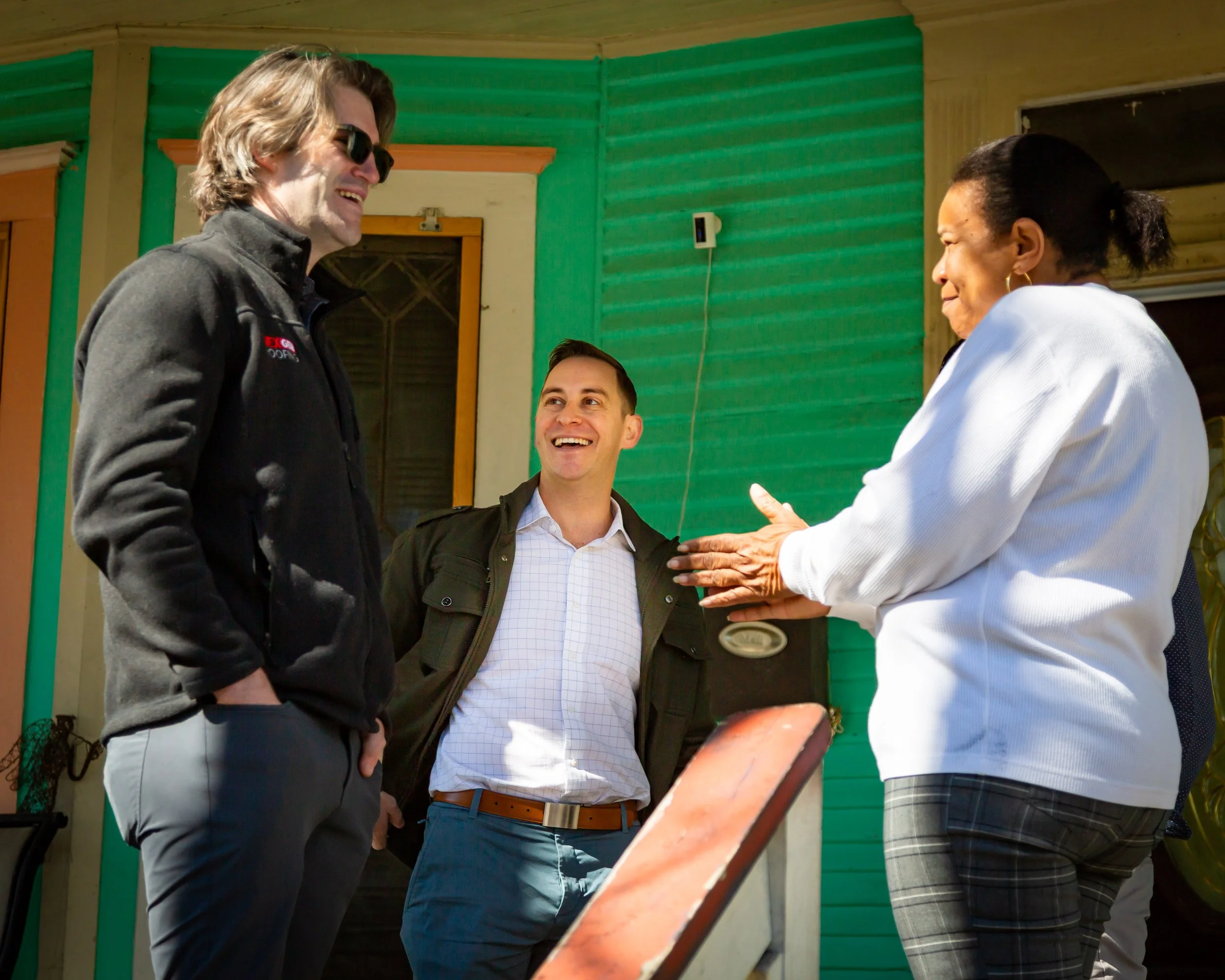
Brandon Cornellier speaking with a homeowner and Councilman Jimmy Peluso in Historic Springfield.
The Underlayment Problem: The Most Skipped Line Item
This deserves its own section because it's the most common way cheap quotes cut costs without homeowners noticing.
The Florida Building Code requires specific underlayment standards for hurricane compliance. A proper Florida installation includes both a synthetic underlayment on the field of the roof AND a self-adhering peel-and-stick membrane at roof-to-wall transitions and around all penetrations — pipe boots, vents, skylights, and chimneys.
Some contractors quote the field underlayment and skip the peel-and-stick at these critical transition points. It saves them $300–$600 per job in materials and labor. It also leaves the highest-risk areas of your roof unprotected — which is exactly where leaks start — and means you likely won't qualify for a full manufacturer system warranty.
What to ask: "Does this quote include a self-adhering membrane at roof-to-wall transitions and around all penetrations?" A yes should be followed by the specific product name.
Why Two Similar Quotes Can Have Completely Different Warranties
Two quotes at similar prices can represent dramatically different long-term value depending on the contractor's certification level and what warranty they can offer.
| Contractor Tier | Material Warranty | Workmanship Warranty |
|---|---|---|
| Unlicensed / uncertified | Standard manufacturer warranty only | None or verbal only |
| Licensed, no manufacturer certification | Standard manufacturer warranty | Contractor's own (1–5 years typically) |
| OC Preferred Contractor | Enhanced system warranty available | Limited workmanship coverage |
| NEXGEN — OC Platinum Contractor | 50-year non-prorated (Platinum Promise) | 25-year workmanship warranty |
A $13,000 quote from a Platinum-certified contractor and a $13,000 quote from an uncertified contractor are not the same product. One comes with a 25-year workmanship warranty backed by Owens Corning. One comes with a handshake. Always verify contractor license status at myfloridalicense.com before signing.
The Subcontractor Question Nobody Asks
Many roofing companies are primarily sales operations. They sign the contract, then subcontract the actual installation to third-party crews they don't directly employ or consistently train. When a job is subcontracted, the installing crew is typically paid by the square — not by the hour. Their incentive is speed. Speed is fine until it means skipping steps.
What to ask any contractor: "Are the people installing my roof your direct employees or subcontractors?" A legitimate contractor answers this without hesitation.
At NEXGEN, our core installation crews are direct employees. Our project managers are on every job. We document every install with photo and video from tear-off through final cleanup — nail placement, underlayment, flashing details, everything. If something is wrong, we own it.
How to Compare Quotes Apples to Apples
When you have multiple quotes in hand, here's the framework for a legitimate comparison:
| What to Compare | What to Look For |
|---|---|
| Exact product specified | Brand, product line, and color — not just "architectural shingles" |
| Underlayment specified | Synthetic field + peel-and-stick at eaves, valleys, penetrations |
| Permit included | Should always be yes — walk away if it's not |
| Disposal included | $1,000+ for replacements (two dumpsters) — ~$500 for new construction |
| Wood replacement policy | Should clearly state "quoted after tear-off" with a per-sheet rate |
| Warranty offered | Material warranty period + workmanship warranty period, both in writing |
| Contractor license number | Florida CCC license — verify at myfloridalicense.com |
| Insurance certificates | General liability + workers' comp — verify they're current |
| Direct employees or subcontractors | Ask directly — it determines quality control and accountability |
If a lower quote is missing any of the above, it's not actually cheaper — it's just quoting less work. Doing the math on what's excluded often closes the gap entirely.
What NEXGEN's Average Quote Looks Like
We believe in full transparency on pricing. Here's what our jobs actually cost based on real installation data since 2018:
| Job Type | Typical Range | What's Included |
|---|---|---|
| Standard shingle replacement (2,000–2,500 sq ft home) | $12,000–$17,000 | OC Duration shingles, full system components, permit, two dumpsters, 50-yr/25-yr warranty |
| Company average (all jobs, all materials) | $13,500 | Based on 3,000 sq ft average roof at $450/square |
| Coastal premium (Beaches, Ponte Vedra) | +10–15% above inland | Corrosion-resistant coastal materials, code requirements |
| Metal roof (standing seam) | $25,000–$60,000 | Full metal system, permit, disposal |
| Cement or clay tile | $35,000–$90,000+ | Full tile system — most common in upscale neighborhoods |
Wood replacement is always quoted separately after tear-off at the actual count of damaged boards — because no contractor can truthfully know how much rot is under your roof until they remove it. We tell every homeowner this upfront. Anyone who gives you a flat number for wood replacement before tear-off is guessing or padding. Check out our post about Wood Replacement Costs Here → or Watch it on YouTube here →
The One Question That Separates Good Quotes from Bad Ones
After everything above, there's one question that cuts through all of it:
"Can you walk me through every line item in this quote and tell me exactly what you're installing?"
A good contractor answers this without hesitation. They name the product. They explain the underlayment spec. They tell you what happens if rot is discovered. They show you the permit line item and explain who pulls it.
A contractor who gets evasive, pivots to the total number, or says "don't worry about the details" is telling you something important. Listen to it.
