
Roofing Shingles Comparison: Every Type Explained for Jacksonville Homeowners (2026)
Category: Roofing Tips | Read time: 12 min | Brandon Cornellier
If you're replacing your roof in Jacksonville, you're almost certainly replacing it with shingles. Over 80% of residential roofs in Northeast Florida are asphalt shingle systems — and for good reason. Installed correctly with the right product, they deliver genuine performance in our climate at a cost that makes sense for most homeowners.
The problem isn't the material category. The problem is that "asphalt shingles" describes everything from a 60-mph-rated 3-tab strip that has no business being on a Florida home to a 130-mph-rated premium architectural system backed by a 50-year non-prorated manufacturer warranty. Both are called shingles. The gap in performance is enormous.
This guide covers every shingle type in the Jacksonville market, the head-to-head comparison between Owens Corning and GAF — the two manufacturers whose products dominate the Northeast Florida market — and a straight recommendation at the end based on what we actually install on 1,500+ Jacksonville roofs.
The Short Version
Three-tab shingles are not appropriate for any Jacksonville home — their 60–70 mph wind rating fails well below hurricane force. Architectural shingles are the right choice for most homeowners: thicker, better wind-rated, longer lifespan, and eligible for manufacturer warranties that actually mean something. At the premium tier, designer shingles add significant curb appeal and lifespan for the right neighborhood and budget. On the manufacturer side, Owens Corning Duration and GAF Timberline HDZ are both excellent products — the real differentiator is the contractor's certification level, which determines the warranty tier available to you. As an Owens Corning Platinum Preferred Contractor (top 1% nationally), NEXGEN can offer the Platinum Promise: 50-year non-prorated materials and a 25-year workmanship warranty — the strongest coverage available in the Jacksonville market. Find your right shingle in 30 seconds →
Understanding How Asphalt Shingles Are Built
Before comparing types, it helps to understand what you're actually comparing. Every asphalt shingle — regardless of tier or brand — starts with the same basic construction: a fiberglass mat base coated in asphalt and surfaced with ceramic granules. The granules provide UV protection, fire resistance, and the color you see from the driveway. The asphalt provides waterproofing. The fiberglass provides structural integrity.
What separates a $1.50-per-square-foot 3-tab from a $4.50-per-square-foot designer shingle isn't a different concept — it's the thickness of the asphalt layers, the quality of the granule coating, the presence of a second laminated layer, the strength of the sealant strips, and the engineering of the shingle's geometry. Those differences translate directly into wind resistance, lifespan, and warranty coverage.
In Florida's climate, the two performance factors that matter most are wind resistance and granule retention. Wind resistance determines whether your roof survives hurricane season intact. Granule retention determines whether your roof hits its lifespan or degrades five to ten years early under our UV intensity. Premium shingles do both better — and in Jacksonville's market, the cost difference between a standard and premium architectural shingle is typically $800–$1,500 on a full replacement. On a $13,500 job, that's a meaningful but not prohibitive difference for the coverage upgrade it delivers.
Type 1 — Three-Tab Shingles: Not for Jacksonville
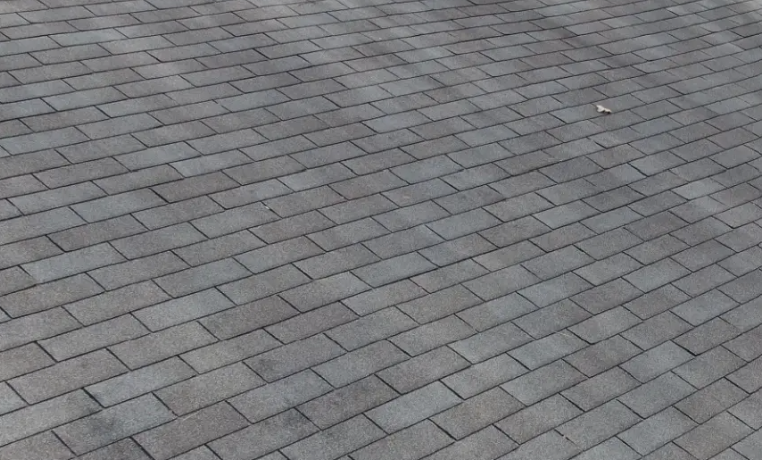
3-Tab Shingle
An antiquated shingle, three-tabs are not appropriate for modern day installation unless absolutely necessary. They are widely considered an inferior product.
Three-tab shingles were the residential standard for decades. Each strip is cut into three uniform tabs, creating a flat, consistent appearance. They're lightweight, inexpensive, and fast to install.
They're also wrong for Jacksonville — and for any Florida home with meaningful storm exposure.
The wind rating on standard three-tab shingles is 60–70 mph. Tropical Storm force begins at 39 mph. Hurricane Category 1 begins at 74 mph. A 3-tab shingle that meets its rated wind threshold still fails at a wind speed Jacksonville regularly sees not just in named storms but in severe afternoon thunderstorms during summer months. The tabs create natural uplift points as wind finds the edges, and the single-layer construction provides minimal resistance once a tab begins to lift.
Beyond wind, three-tab shingles in Florida's UV environment typically last 12–18 years inland — well below even their reduced national rating of 20–25 years. The granule coat thins faster under our UV intensity. The sealant strips that bond each shingle to the one below degrade sooner. By year 15, a three-tab roof in Jacksonville is frequently showing curling, granule loss, and early shingle failure that leaves the home vulnerable before any replacement timeline was anticipated.
If you receive a quote that includes three-tab shingles for a Jacksonville home, ask why. The honest answer is that it's the cheapest product and the contractor is competing on price. The more important question is what that choice looks like at year 12 when the next replacement cycle arrives ahead of schedule.
Type 2 — Architectural Shingles: The Right Baseline for Jacksonville
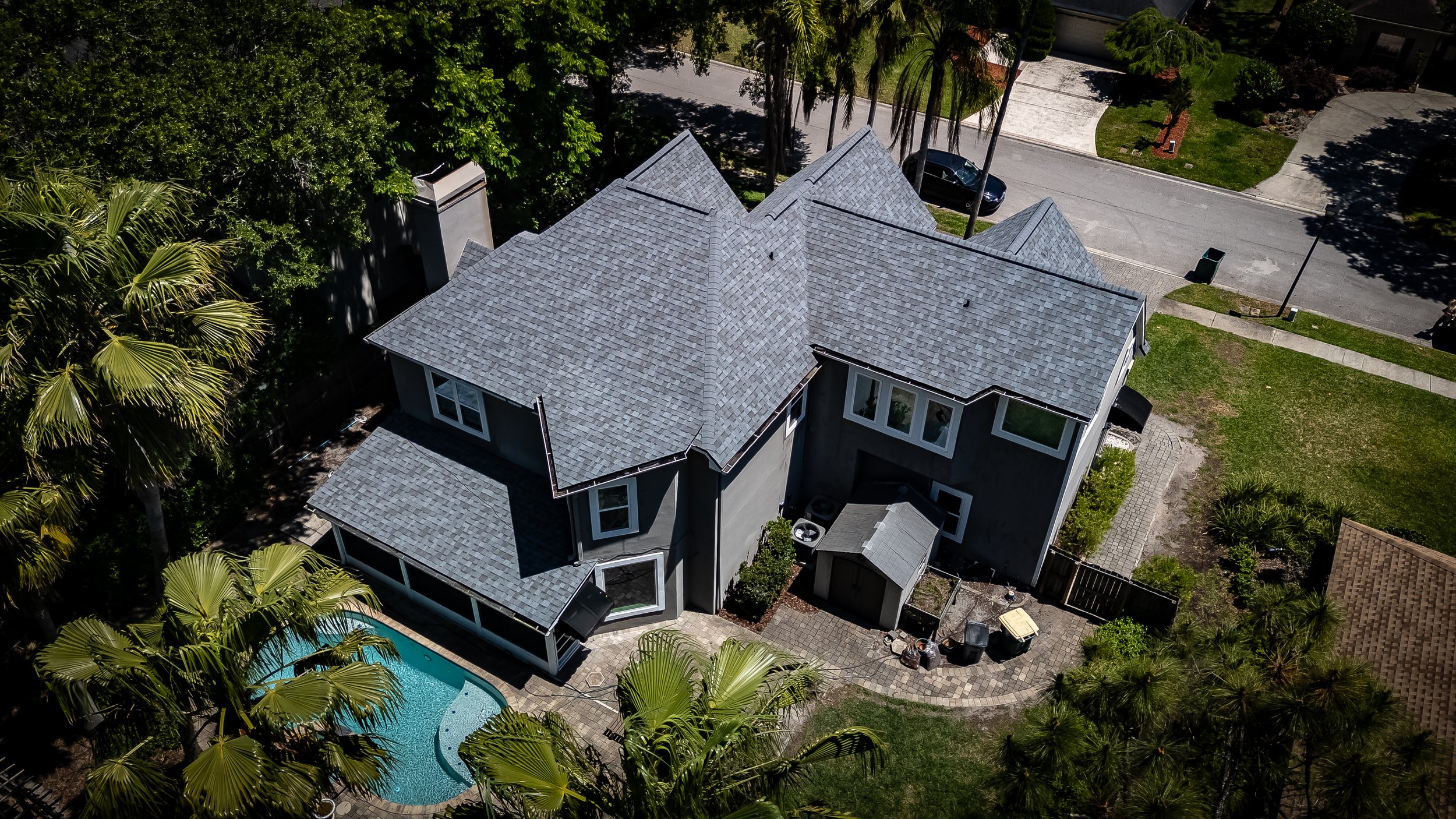
An architectural not only withstands the elements better than three-tab shingles but the texture make for a better aesthetic.
Architectural shingles — also called dimensional or laminate shingles — are the right choice for the majority of Jacksonville homeowners. They're the product NEXGEN installs on most of our jobs, and the performance gap over three-tab is not marginal. It's fundamental.
The defining structural difference is lamination. An architectural shingle bonds two layers of asphalt-coated fiberglass together, creating a thicker, heavier product with a dimensional surface profile. That lamination does several things simultaneously: it dramatically increases the shingle's mass and resistance to wind uplift, it creates the shadow lines that give architectural roofs their characteristic depth and visual appeal, and it puts significantly more granule mass between your roof deck and the Florida sun.
Wind ratings at the architectural tier start at 110 mph for standard products and reach 130 mph for premium products like Owens Corning Duration with SureNail technology. That 130 mph rating covers Category 3 hurricane force and provides meaningful protection through the full Jacksonville storm season. The laminated construction also means that if a shingle does begin to lift, the bonded second layer provides a secondary line of resistance that three-tab doesn't have.
Lifespan in Jacksonville's climate runs 20–28 years for quality architectural products installed with proper ventilation — approximately 50% longer than three-tab on the same roof. For coastal properties within a mile of the ocean, expect the lower end of that range due to salt air's effect on the granule coating and underlying asphalt.
The warranty picture changes significantly at the architectural tier. A standard architectural shingle from a major manufacturer carries a 10-year non-prorated limited warranty. A premium architectural shingle installed by an elite-tier certified contractor unlocks substantially stronger coverage — which we'll address in the OC vs. GAF section.
Type 3 — Designer and Luxury Shingles: When Curb Appeal and Performance Align
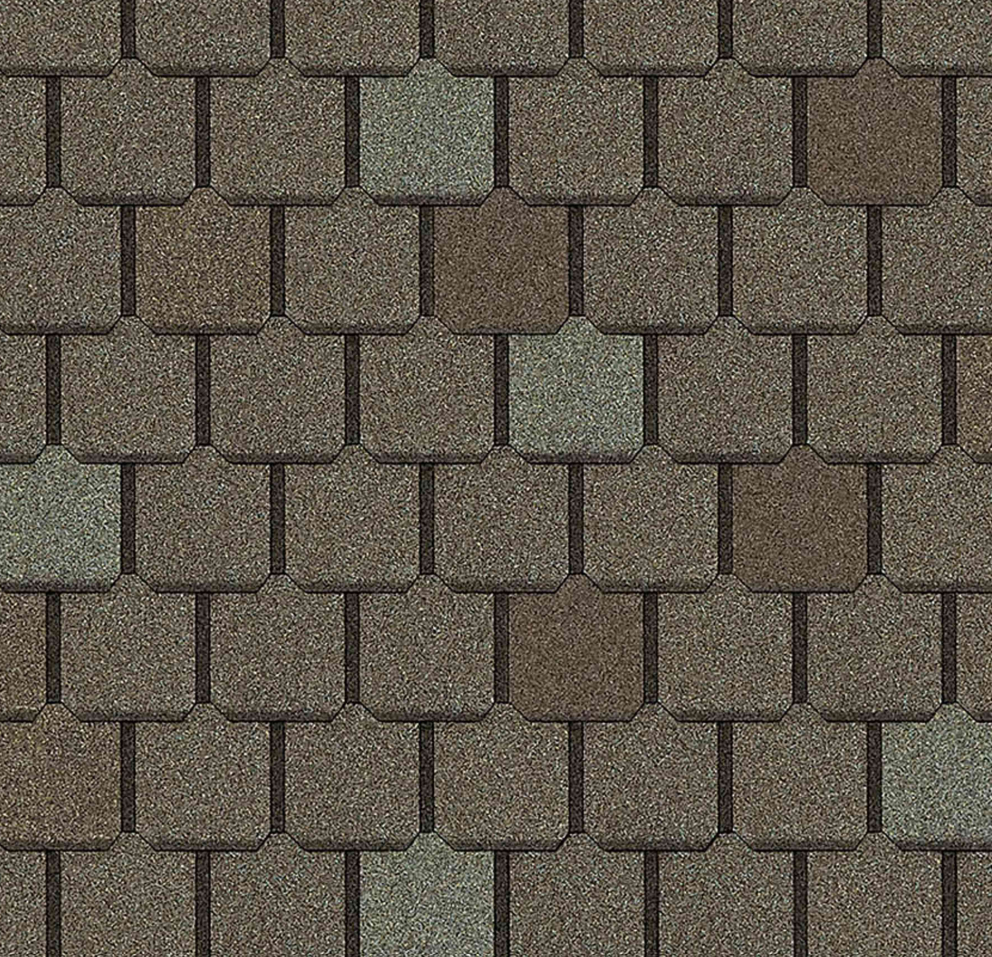
The Owens Corning Berkshire series adds a level of luxury aesthetic to any home — at a cost!
Designer shingles — sometimes called luxury or premium shingles — represent the top tier of asphalt shingle manufacturing. Products like Owens Corning Berkshire, GAF Grand Sequoia, and similar luxury lines are engineered to replicate the aesthetic of natural slate, wood shake, or high-end tile at a fraction of the material weight and cost.
The performance advantage over standard architectural products is real but not dramatic. Wind ratings are similar — 130 mph on most luxury lines. The primary upgrades are thicker construction that further increases impact resistance, more sophisticated granule coatings that retain color better under UV exposure, and enhanced sealant strips that maintain adhesion through more Florida heat cycling seasons.
The genuine case for designer shingles in Jacksonville is aesthetic and neighborhood-specific. In communities like Deerwood, Deercreek, Marsh Landing, Palencia, and upper-end Ponte Vedra neighborhoods where curb appeal significantly affects property value, the step up to a designer product delivers a visual upgrade that standard architectural shingles simply can't replicate. The wood shake profile of a well-installed luxury shingle on the right home is genuinely striking.
The cost premium is real — designer products typically add $1,500–$3,500 to a full replacement compared to standard architectural — and the performance-per-dollar argument favors architectural for most Jacksonville homes. But for the homeowner who plans to stay long-term in a neighborhood where the upgrade is visible and valued, designer shingles are a legitimate choice rather than a vanity spend.
Owens Corning vs. GAF — The Head-to-Head Jacksonville Homeowners Actually Need
These are the two dominant manufacturers in the Northeast Florida shingle market. Every Jacksonville roofing contractor of substance is certified with one or both. Here's the honest comparison.
| Category | Owens Corning Duration | GAF Timberline HDZ |
|---|---|---|
| Wind rating | 130 mph (SureNail technology) | 130 mph (LayerLock technology) |
| Algae resistance | 25-year StreakGuard | 25-year StainGuard Plus |
| Color options | TruDefinition palette — 30+ colors | Robust palette — 25+ colors |
| Nailing zone | SureNail woven reinforcement strip — wider target zone | Standard printed nailing line |
| Standard product warranty | 10-year non-prorated, then prorated | 10-year non-prorated, then prorated |
| Top-tier contractor warranty | Platinum Promise: 50-yr non-prorated + 25-yr workmanship | Golden Pledge: 50-yr non-prorated + 25-yr workmanship |
| Top-tier certification | Platinum Preferred — top 1% of contractors | Master Elite — top 2% of contractors |
| NEXGEN certification | Platinum Preferred | GAF Certified Plus |
Read even further about the comparison of GAF vs. Owens Corning.
At the product level, OC Duration and GAF Timberline HDZ are genuinely close. Both carry 130 mph wind ratings. Both offer 25-year algae resistance. Both have strong color palettes. The SureNail woven reinforcement strip on the Duration gives installers a more reliable nailing zone — which matters on a high-volume installation day and translates directly into more consistent wind resistance across every row of shingles. It's a meaningful engineering advantage that shows up not in the showroom but on the roof in year 15 when every fastener has been through seven hurricane seasons.
The more important comparison isn't product-to-product — it's warranty-to-warranty, and that comparison is entirely determined by the contractor's certification level. A standard OC Duration installation from a non-certified contractor carries a 10-year non-prorated warranty that then prorates rapidly. The same product installed by an OC Platinum Preferred contractor carries the Platinum Promise — 50 years, fully non-prorated, with 25-year workmanship coverage from the manufacturer. That's not a modest upgrade. That's the difference between a warranty that means something and one that means almost nothing by year 15 when you might actually need it.
NEXGEN holds OC Platinum Preferred status — top 1% of contractors nationally. We also hold GAF Certified Plus, giving us access to both product lines. For full replacement projects, we recommend and install OC Duration as our primary architectural product because the Platinum Promise warranty available under our certification level is the strongest residential roofing warranty available in the Jacksonville market. Period.
The Question Nobody Asks But Everyone Should: What's the Nailing Pattern?
This is the single most important installation detail that most Jacksonville homeowners never think to ask about — and the one that separates a code-compliant installation from one that will cost you in the next storm.
Florida Building Code requires shingles to be fastened with ring-shank nails in a specific pattern with nails placed in the nail zone designated by the manufacturer. On OC Duration, that nail zone is the woven SureNail strip — a two-inch reinforcement band that provides a clearly visible, wider target for the installer. Nails placed outside the nail zone don't engage the shingle's primary structural layer properly. Under wind uplift, those shingles fail earlier and at lower wind speeds than a correctly fastened shingle on the same roof.
The shortcut isn't nail count — it's nail placement. A roof with four nails per shingle placed correctly outperforms a roof with six nails placed poorly under wind load. When you ask NEXGEN about our nail pattern, we show you photos from the installation before the next row goes over it. That documentation exists on every job we do. Any contractor who can't or won't provide it is asking you to take their word for something you can no longer verify once the job is complete.
NEXGEN's Recommendation for Jacksonville Homeowners
For the vast majority of Jacksonville residential roofs — inland homes, standard suburban neighborhoods, homeowners who plan to stay in the property for 10 or more years — the right answer is Owens Corning Duration architectural shingles installed by an OC Platinum Preferred contractor with the Platinum Promise warranty registered in your name.
The reasoning is straightforward. Duration is a genuinely excellent product in our climate — the SureNail strip provides installation consistency that reduces the variance between a well-executed row and a rushed one, the StreakGuard algae resistance is meaningful in Jacksonville's humidity, and the 130 mph wind rating covers our realistic storm exposure. The Platinum Promise covers both the material and the installation for timeframes that actually reflect the useful life of the product. That combination — product quality plus warranty depth — is what protects you, not just on day one, but in year 18 when the next contractor is quoting a replacement and telling you the previous installation was substandard.
For premium neighborhoods where the aesthetic of a designer product genuinely adds value, OC's Berkshire collection or equivalent is worth the conversation.
What doesn't change is the contractor piece. The best shingle in the market installed by an uncertified contractor with a one-year workmanship warranty is a weaker proposition than a strong product installed by a Platinum-certified contractor with 25-year workmanship backing. In Jacksonville's market, both the material and the person installing it matter. Get both right.
Not sure which system fits your home? If you’re wondering what roof works best for your home, we built the perfect tool for you — four questions, under 30 seconds, no email required.
Related guides:
External links: owenscorning.com | gaf.com | floridabuilding.org
